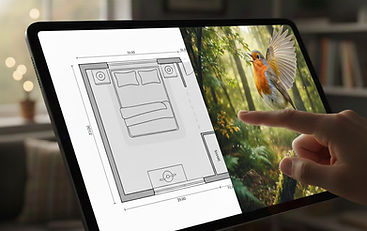
Connection to Nature
What is biophilic design ?
Humans are deeply connected to nature, yet modern homes often separate us from it. Biophilic design restores this essential link and positively influences how we think, feel, and function.
What Are the Health and Wellbeing Benefits of Biophilic Design in Homes and Interiors ?
Scientific research shows that biophilic design can significantly improve wellbeing. By bringing natural elements, light, shapes and materials into interior spaces, homes can help reduce stress, improve mood, and restore mental energy, while also enhancing concentration, creativity, and mental clarity.
Natural colours, textures, and materials further support emotional comfort and a stronger sense of connection to nature.
How Biophilic Design Is Applied in Residential Homes ?
Visual Connection to Nature
Views toward gardens, trees, and landscapes reduce stress and improve mood and cognitive performance.
Indoor Greenery and Living Systems
Plants, indoor gardens, and green walls introduce living elements that purify air and soften interiors. Also, living elements introduce life and seasonal variation.
Natural Light and Daylight Maximisation
Large openings, skylights in a room, and thoughtful layouts maximise daylight and reconnect interiors with the natural cycle of the day. Natural light exposure supports circadian rhythms, improving sleep, energy, and mood.
Circadian Lighting
Lighting is designed to support the body’s circadian rhythm, the natural 24-hour biological cycle that regulates sleep, alertness, hormones, and energy. By aligning natural and artificial light with this rhythm, homes can improve sleep quality, focus, and overall wellbeing.
Natural Materials, Colours and Textures
Wood, stone, natural fibres, and organic textures create warmth, grounding interiors in nature while providing tactile comfort.
Custom textiles, like throws, or bed linens can be created for individual clients to enhance comfort and personal connection.
Sound and biological rhythms
Acoustics are carefully shaped working on the building envelope to reduce disruptive noise and introduce natural sounds from outside, supporting biological rhythms.
When modifying the building fabric or walls isn’t possible, specialised equipment can create dynamic, nature-inspired audio environments. These systems align with the body’s circadian rhythm by processing inputs such as time of day, geolocation, and light levels, ensuring sound evolves naturally to reinforce calm, restoration, and a deeper connection to nature.
Natural Fragrances and Aromatherapy
Subtle scents created from local natural plant sources enhance emotional wellbeing and strengthen the sensory connection to nature.
Indoor–Outdoor Spatial Flow
Layouts blur the boundary between interior and exterior spaces through terraces, courtyards, and visual continuity.
Air Quality and Natural Ventilation
Biophilic design encourages natural airflow and the use of healthy, non-toxic materials, creating indoor environments that feel alive and connected to nature. Proper ventilation and breathable spaces not only improve air quality and physical wellbeing but also let occupants experience the rhythms and freshness of the natural world, reinforcing our innate connection to it.
Nature-Inspired Forms and Biomimicry
Design increasingly looks to biomimicry. Biomimicry is the practice of learning from and emulating nature’s strategies, forms, and processes to solve human design challenges. In residential interiors, it can inspire energy-efficient layouts, natural ventilation, material selection, and innovative spatial solutions that work in harmony with the environment. Even when applied at a small scale, biomimicry strengthens our connection to nature.
Natural Patterns and Forms (Biomorphic Design)
Using fractals and organic shapes inspired by nature. Shapes and patterns that mimic natural forms enhance aesthetic pleasure and reduce stress.