top of page


Intuitive and Smart Layouts
The way a home is organised has a profound impact on how we think, move, and feel within it.
Research in environmental psychology and neuroscience shows that spatial layout influences navigation, cognitive effort, and emotional responses.
Specific brain regions are responsible for interpreting spatial geometry and environmental context, helping us understand where we are and how to move through space.
When layouts are confusing or fragmented, the brain must work harder to interpret the environment.
Clear, legible spatial organisation reduces cognitive load, allowing people to move naturally and experience the home with greater comfort and ease.
Why Spatial Organisation Matters
Humans instinctively seek environments that are easy to understand and navigate. Clear spatial relationships and visual connections help the brain quickly interpret the layout of a space, creating a sense of orientation, openness, and calm.
When circulation flows naturally and rooms are organised around daily activities, the home feels intuitive rather than demanding mental effort. This improves comfort, reduces stress, and supports everyday wellbeing.
How We Design Intuitive Layouts
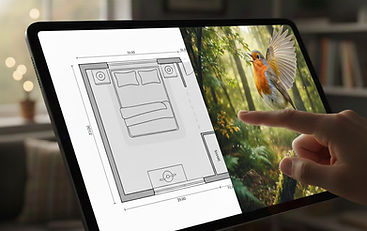
At Brick & Moss, spatial organisation begins with understanding how people move through their home and how daily routines unfold.
Layouts are reorganised to align with natural movement patterns, creating clear circulation paths and visual connections between spaces.
Strategic openings and sightlines enhance spatial depth and orientation, making the home easier to understand and navigate.
We balance openness with moments of retreat, combining connected social spaces with quieter areas that support rest, focus, and privacy.
Storage and functional zones are organised around everyday rituals, ensuring essential items are accessible and logically placed.
Underused areas are often transformed into purposeful spaces that improve the overall flow and usefulness of the home.




bottom of page